Is Kodotone an XO alternative?
Kodotone can be an alternative when the buyer wants a lane-based rhythm instrument with generated patterns, samples, swing, humanize, ghost notes, and MIDI output.
Kodotone vs XO / 01
Kodotone and XO can sit near each other in a drum-tool search, but Kodotone's case is groove-first. It is for building lane patterns, steering feel, adding samples, and sending MIDI when the rhythm needs to travel.
Quick answer
Choose Kodotone when you want a rhythm instrument built around lanes, generated patterns, samples, swing, humanize, ghost notes, and MIDI output. XO may suit you if its own sample workflow already anchors your drums; choose Kodotone when groove shaping and performance controls matter most.
Section 01
Ask whether the core problem is finding sounds or making patterns move.
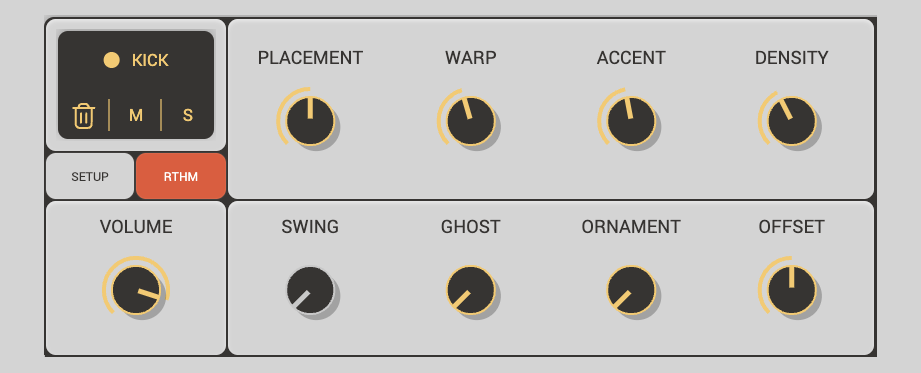
Kodotone lets you add built-in voices or samples to lanes, then shape the rhythm through density, placement, swing, humanize, ghost notes, accents, and global groove controls. It is happiest when the pattern is still changing.
If another drum tool already gives you the sample workflow you want, keep it. Kodotone makes more sense when you want the groove engine itself to be the thing you play.
Section 02
Use the table to keep the page useful for buyers, not just keyword-shaped.
| Buyer need | Choose Kodotone when | Choose another route when |
|---|---|---|
| Pattern generation | You want lane density, placement, swing, ghost notes, and accents. | You mainly want to manage or browse samples elsewhere. |
| Feel | You want global groove dials and humanized movement. | You prefer exact fixed step editing only. |
| Samples | You want imported samples inside generated lanes. | Your existing sample workflow is already enough. |
| Routing | You want MIDI output plus standalone, AUv2, and VST3. | One closed drum plugin path is all you need. |
Section 03
Kodotone is not trying to replace every sound-finding workflow.
If your bottleneck is only sample organisation, Kodotone may not be the neatest answer. If your bottleneck is making drum ideas feel less stiff without rebuilding them step by step, it is much more relevant.
Section 04
Check Kodotone's product page and guide before deciding.
The guide is the best way to understand lanes, samples, swing, humanize, MIDI output, and settings. The product page carries the price, compatibility, and checkout path.
FAQ
Kodotone can be an alternative when the buyer wants a lane-based rhythm instrument with generated patterns, samples, swing, humanize, ghost notes, and MIDI output.
Kodotone supports imported WAV and MP3 samples, but its buying reason is broader: sample-capable generated grooves with hands-on feel controls.
Yes. Kodotone includes MIDI output options, including note and clock modes described in the Kodotone guide.